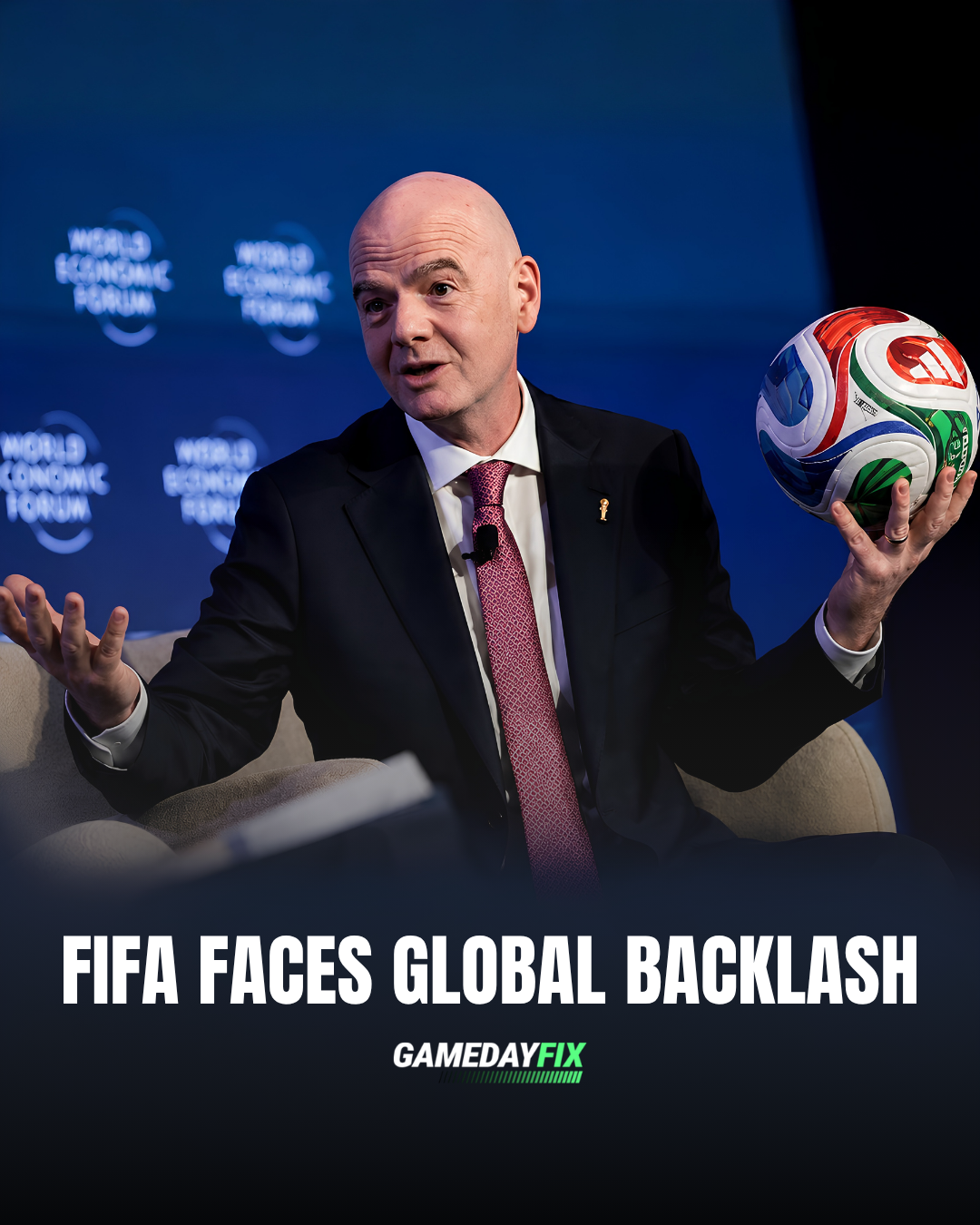
A growing power struggle is unfolding at the top of world football.
What began as UEFA’s opposition to FIFA President Gianni Infantino’s proposal to bring private investors into the commercial rights of the FIFA World Cup has quickly grown into a broader movement. UEFA’s 55 member associations have unanimously rejected the proposal, and Concacaf, including U.S. Soccer and its 41 member associations, has also voiced strong opposition, creating one of the biggest governance battles in FIFA’s modern history.
At the center of the controversy is FIFA Forward Enterprise (FFE), a newly proposed commercial company that would allow private investors to purchase a 20 percent minority stake. FIFA believes the deal could raise approximately $4.2 billion while valuing the business at around $20 billion. Gianni Infantino has argued that the investment would generate billions in additional funding for football development across FIFA’s 211 member associations while allowing FIFA to retain full control over competitions and governance.
That explanation has done little to convince football’s most influential confederations.
UEFA released a unanimous statement declaring that the World Cup is one of football’s greatest sporting legacies and “is not for sale.” European football leaders also warned that introducing private equity into the sport could permanently shift the focus from competition to profit. They criticized FIFA for developing the proposal without meaningful consultation and have threatened to boycott FIFA competitions if the plan is approved.
Concacaf, led by its 41 member associations and supported by U.S. Soccer, stopped short of announcing a boycott but expressed deep concerns over the lack of transparency, the rushed approval timeline, and the absence of proper governance throughout the process. The confederation called for a more open and accountable review before any decision is made.
The united opposition from Europe and North America places enormous pressure on FIFA. Together, UEFA and Concacaf represent many of the world’s most commercially valuable national teams, including England, Spain, France, Germany, Italy, Mexico, Canada and the United States. Their resistance significantly weakens support for Infantino’s proposal and raises serious questions about its future.
For Gianni Infantino, this is about more than securing outside investment. It has become a referendum on his leadership and vision for the future of football. As FIFA’s member associations prepare to vote, the outcome could reshape not only the business of the World Cup but also the balance of power within the global game. The battle is no longer simply about money. It is about who controls football’s future.