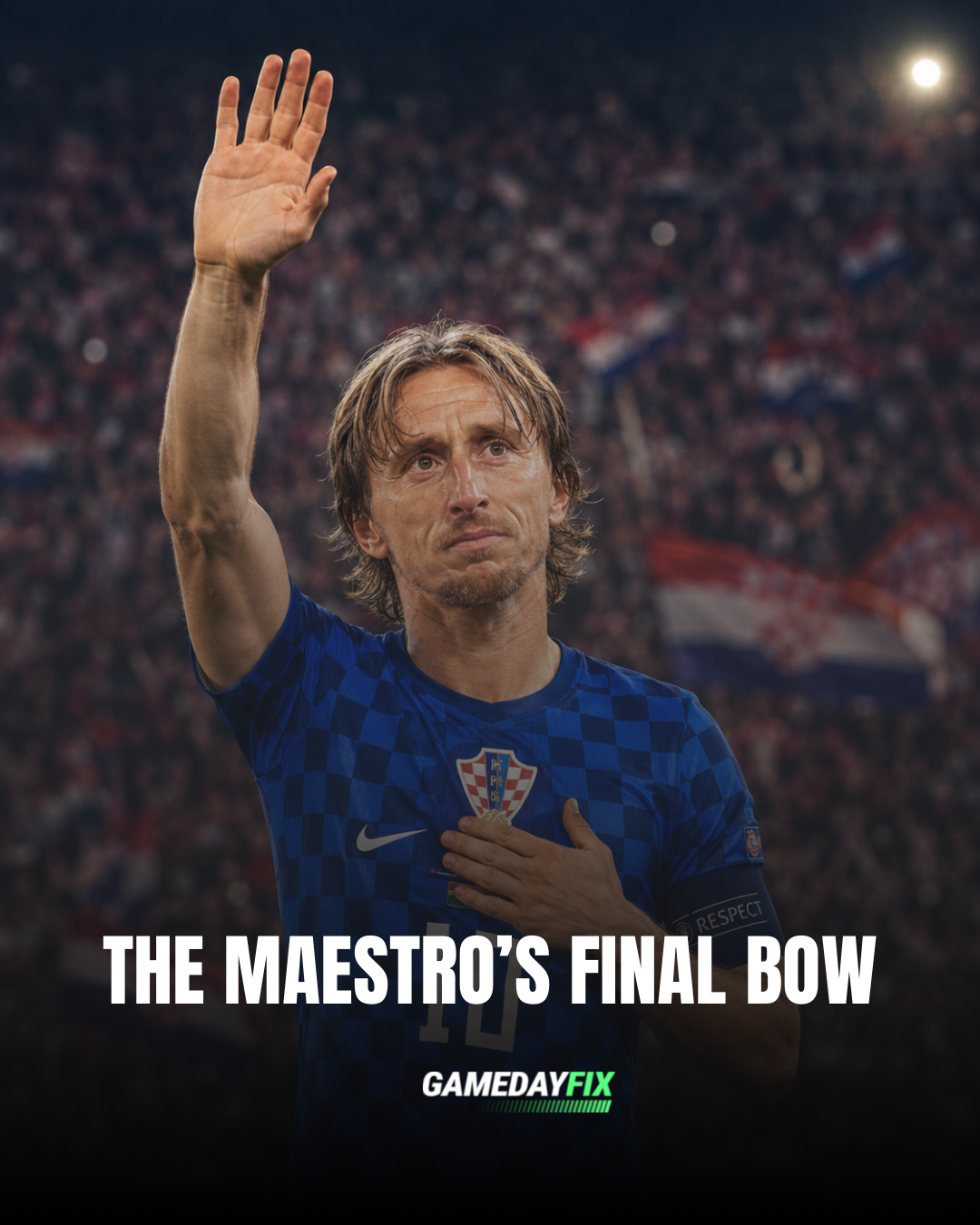
Every great football story eventually reaches its final chapter. For Luka Modrić, Croatia’s beloved Maestro, that chapter appears to have closed in the most painful way possible.
Croatia’s 2-1 loss to Portugal in the FIFA World Cup Round of 32 was more than just another knockout defeat. It was a wild, emotional, back-and-forth match that carried the weight of history. For Croatia, it ended their tournament. For Modrić, it likely marked his final appearance on the World Cup stage.
A Wild Match With a Cruel Ending
Croatia fought with the same pride and stubborn belief that has defined this golden generation for years. They pushed Portugal, absorbed pressure, created moments, and looked capable of dragging the match into extra time.
Portugal, however, found the moments that mattered most. After a tense battle filled with drama, momentum swings, and late nerves, Croatia was left chasing the game. The 2-1 scoreline only tells part of the story. This was a match that felt bigger than the result because everyone watching knew what it could mean for Modrić.
When the final whistle blew, it was not just the end of Croatia’s World Cup run. It felt like the end of an era.
The Maestro’s World Cup Legacy
Luka Modrić’s last World Cup match will hurt, but it cannot erase what he built with Croatia.
He led his nation to the 2018 World Cup Final, winning the Golden Ball as the tournament’s best player. Four years later, he helped Croatia finish third at the 2022 World Cup, once again proving that Croatia could stand with football’s biggest nations.
For a country of just over four million people, Croatia’s rise was never supposed to look like this. Modrić made it possible. His vision, calmness, passing range, leadership, and football intelligence gave Croatia an identity. He was never the loudest player on the pitch, but he was almost always the most important.
A Career Full of Historic Highs
Modrić’s greatness goes far beyond international football.
At Real Madrid, The Maestro became one of the most decorated midfielders of all time. He won six UEFA Champions League titles, multiple La Liga trophies, and played a major role in one of the greatest club dynasties football has ever seen.
His highest individual moment came in 2018, when he won the Ballon d’Or, breaking the long dominance of Lionel Messi and Cristiano Ronaldo. That award confirmed what football people already knew: Modrić was not just world class, he was generational.
A Legend Leaves the Stage
Not every legend gets a perfect ending. Modrić deserved one, but football rarely works that way.
Still, his legacy is untouchable. He gave Croatia belief, pride, and unforgettable memories. He turned a small nation into a World Cup powerhouse and carried himself with elegance until the very end.
The Maestro may have played his final World Cup match, but his music will be remembered forever.